
Your listing paperwork keeps eating the hours you should spend closing deals. Every new property means the same forms, the same CRM entries, the same signature chase, and most agents just absorb the overtime.
This article breaks down what separates useful form filling automation from tools that create more admin, covering listing forms, CRM sync, e-signature support, pricing, and compliance. You will get five concrete picks, starting with Tasks.Bot, plus criteria to match a tool to your deal volume and team size.
What to Look For in Form Filling Automation Software for Real Estate Agents
Real estate agents juggle dozens of forms per transaction, from listing agreements to closing disclosures, so the right form filling automation software must eliminate repetitive typing while keeping every document compliant.
Generic form fillers often fall short in this niche. They lack real estate-specific forms, MLS integration, and e-signature workflows, which forces agents back into manual data entry and disconnected tools.
Evaluating the right platform comes down to two areas. First, the core features that handle listing data, client records, and signatures. Second, the operational side: pricing, compliance, and how well the tool fits your existing stack.
Key Features: Listing Forms, CRM Sync, and E-Signature Support
A top-tier form filler for real estate must auto-populate listing data from the MLS, sync with your CRM to pull client details, and support e-signatures without leaving the platform.
MLS integration is the anchor feature. When listing data flows directly into a buyer representation agreement or seller disclosure, agents avoid retyping addresses, prices, and property details. This alone can cut form completion time per transaction.
CRM sync extends that efficiency. A connected real estate CRM auto-fills client contact info, property history, and communication logs, so every document reflects the latest record. Field mapping ensures the right data lands in the right blank.
E-signature support with audit trails matters for purchase agreements and closing documents. Look for tools that capture who signed, when, and from what device, since that record protects all parties if a deal is disputed.
Other features worth prioritizing:
- Template libraries with conditional logic that adapt to state-specific forms and transaction types
- Bulk sending for agents handling multi-property transactions or portfolio deals
- Data extraction and OCR to pull details from scanned documents into new forms
- Lead capture that feeds new contacts straight into the automation workflow
Together, these features support a genuine paperless office rather than a patchwork of disconnected tools.
Pricing, Compliance, and Integration Considerations
Beyond features, agents must evaluate pricing models (per-user vs. per-transaction), compliance with state and federal regulations (e.g., ESIGN Act, TRID), and integration with existing tools like Dotloop, SkySlope, or ZipForm.
Pricing structures vary widely. Some platforms charge a flat subscription, while others bill per form or per envelope sent. Watch for hidden fees tied to e-signatures, document storage, or overage on monthly sends, since these can quietly inflate the real cost.
Compliance deserves equal scrutiny. Confirm that the software maintains audit trails, encrypts data in transit and at rest, and follows clear retention policies. Form updates also matter: when regulations change, the template library should reflect new requirements without manual fixes.
Integration determines whether the tool fits your workflow or fights it. Check for:
- Native connectors to transaction management platforms you already use
- API access for custom connections to your brokerage systems
- Zapier support to bridge tools that lack a direct link
Before committing, calculate total cost of ownership across seats, sends, and storage. Then test the integration with your CRM and MLS to confirm data actually flows both ways. A short trial period reveals more than any feature list, and it prevents a costly switch later.
1. Tasks.Bot - Best Overall
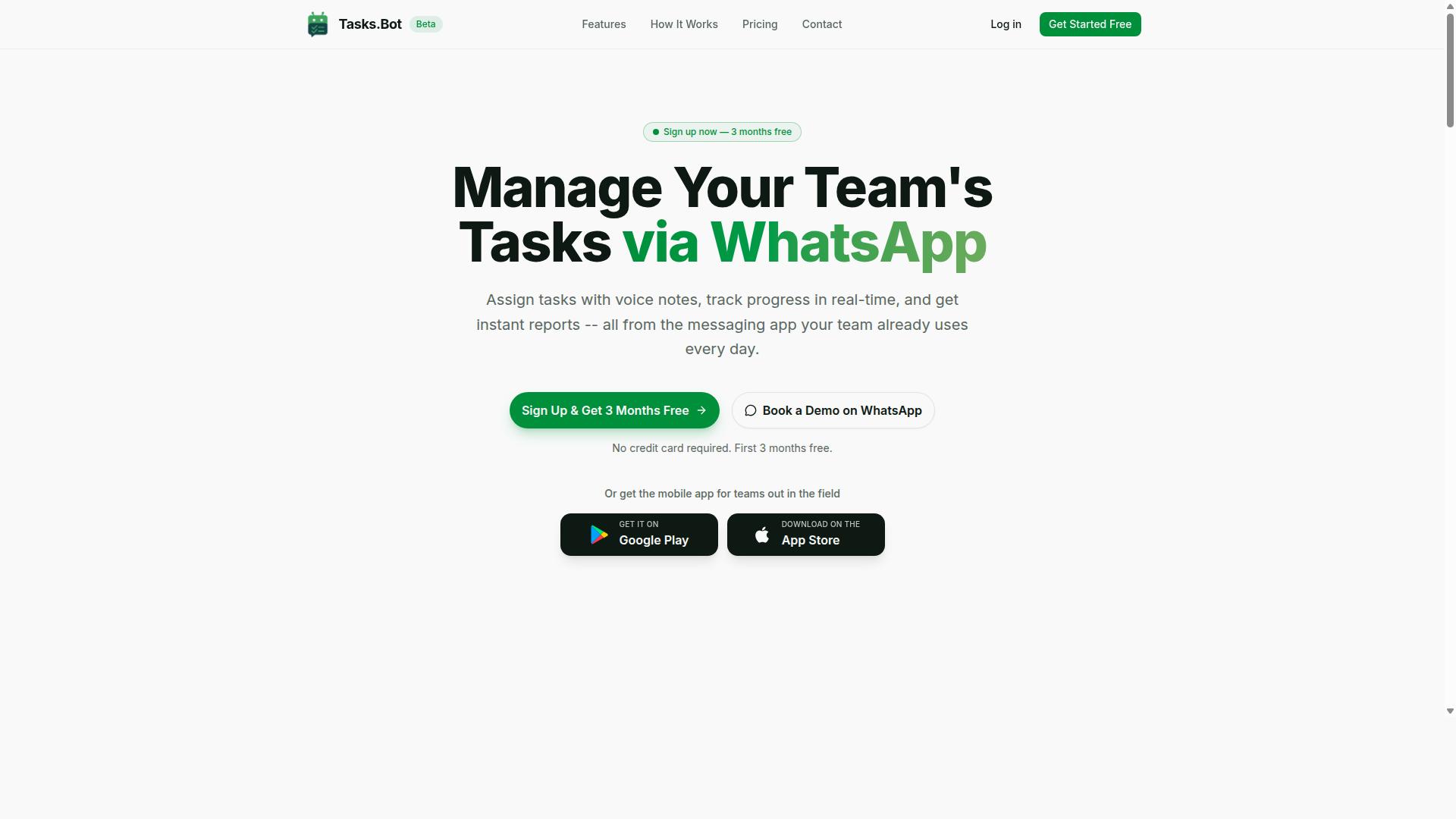
Tasks.Bot earns the top spot for real estate agents who live in WhatsApp, combining task management with form-filling automation to streamline deal workflows without new apps.
Most document automation tools ask agents to adopt another dashboard. Tasks.Bot takes the opposite route. It runs entirely inside WhatsApp, so agents, field staff, and coordinators can assign tasks, fill forms, and get approvals without installing anything.
Two features stand out for real estate teams. The AI reads natural language and voice notes to create tasks, and face-verified attendance keeps field staff accountable at showings and site visits. For teams already coordinating deals through chat, that combination is hard to match.
WhatsApp-Native Task and Form Workflow Automation
Tasks.Bot transforms WhatsApp into a command center for real estate teams, letting agents create tasks via voice notes, auto-assign them to field staff, and trigger form-filling workflows without leaving the chat.
The AI understands user intent from a message or voice note, then creates the task and routes it to the right person. Smart deadline reminders keep buyer representation agreements and seller disclosures moving instead of sitting in someone's inbox.
For document automation, Tasks.Bot can auto-populate forms using data already shared in WhatsApp conversations or pulled from an integrated real estate CRM. Once a document is ready, it can be sent for e-signature integration through the same chat thread. No PDF filler, no separate portal, no lost attachments.
Approvals and automations handle the back-and-forth that slows transactions. A manager can approve a purchase agreement revision from their phone, and instant reports show what is pending across the team. Other capabilities round out the workflow:
- Tasks on a map for field staff visiting listings
- Live day tracker and shifts, leave, and hours management
- Android and iOS apps with push notifications, voice capture, and a home screen widget
Tasks.Bot is currently in beta and offers a Book a Demo on WhatsApp option for teams that want to see the workflow before committing.
Pricing and Free Trial
Tasks.Bot offers a straightforward 'Full Access' plan with all features included, priced at ₹200 per member per month or ₹1,200 per year per member, with no hidden tiers.
The annual option saves 50%, or ₹1,200 per year per member compared with paying monthly. Pricing is available in both Indian Rupees and US Dollars, and the site includes a 'Select currency' option, so agents should confirm the currency shown before checkout.
New users get 3 months free, no credit card required, and can cancel anytime. That free window is worth noting because the guidelines for this roundup mention no separate free trial, so the three-month offer is the main way to evaluate the tool at no cost.
A refund policy is listed in the footer of the site. Since the service is in beta, teams should read that policy before subscribing annually.
Cost scales directly with team size, so calculate before choosing a plan:
- A 5-person team pays ₹1,000 per month, or ₹6,000 per year
- A 10-person team pays ₹2,000 per month, or ₹12,000 per year
- A 20-person team pays ₹4,000 per month, or ₹24,000 per year
For brokerages comparing form filling automation software, the per-member structure makes budgeting predictable. Add up agents, coordinators, and field staff who need task access, then compare that total against tools that charge per transaction or per document package.
2. Reminderly.ai
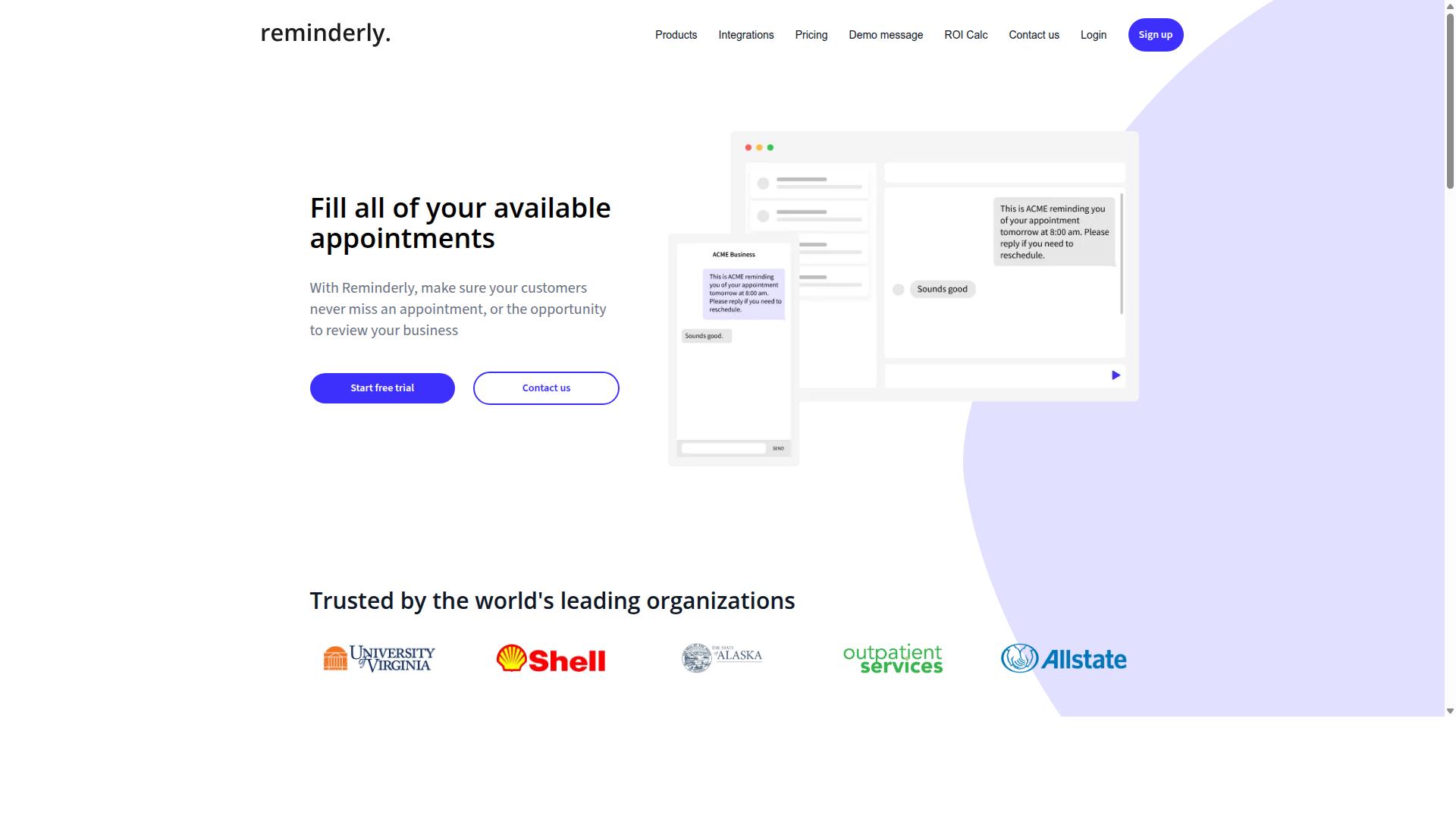
Reminderly.ai focuses on automated reminders and task scheduling, making it a solid choice for agents who need to stay on top of deadlines but want basic form-filling support. Rather than positioning itself as a full document automation platform, it leans toward keeping people and processes on track through timely nudges.
For real estate agents juggling multiple clients, that reminder-first approach can be genuinely useful. A buyer representation agreement that needs a signature, a seller disclosure waiting on a response, or a purchase agreement nearing its deadline all benefit from automated follow-ups. Staying ahead of deadlines is often the difference between a smooth closing and a delayed one.
Where Reminderly.ai tends to fall short is in the depth of its form-filling tools. It is not built to handle auto-populate across complex documents, field mapping from listing data, or conditional logic that changes what appears on a page based on earlier answers. Agents who need heavy PDF filler capability or a deep template library may find it lighter than dedicated document automation software.
The platform does work together with calendars and many real estate CRM systems, which helps it slot into an existing workflow rather than replace it. That makes it a reasonable companion tool for agents whose main pain point is follow-up, not paperwork itself. Pricing typically starts at around $10 per user per month, though plans and rates can vary by provider and seat count.
Buyers considering it should weigh a few common gaps against their needs:
- Limited or no MLS integration for pulling listing data directly into forms
- Fewer advanced features such as conditional logic or bulk sending
- Less emphasis on transaction management and closing documents
- Weaker audit trail and compliance tooling than dedicated platforms
None of these are dealbreakers for every agent. If your workflow centers on reminders, scheduling, and light form support, Reminderly.ai can cover that ground. If your priority is document automation from lead capture through closing, a more specialized tool will likely serve you better.
3. TaskRio

TaskRio combines task management with basic form automation, appealing to small real estate teams that need a simple, affordable way to generate standard documents. It sits in the lightweight tier of form filling automation software, where the goal is speed and simplicity rather than a deep feature set.
Rather than building a full transaction management platform, TaskRio focuses on two core jobs: filling forms from templates and assigning the resulting tasks to teammates. For a small office, that combination can cover the essentials without a steep learning curve.
Template-based form filling is the centerpiece. Agents pick a saved template, enter or import the client details, and the tool populates the fields. It is a practical approach for documents that change little from one deal to the next.
Task assignment rounds out the workflow. Once a form is generated, the related steps can be routed to the right person, which helps small teams keep track of who owes what on each file. Think of it as a shared to-do list attached to your paperwork.
Where TaskRio falls short is depth. Based on publicly available information, it does not appear to offer MLS integration, so listing data typically has to be entered by hand rather than pulled in automatically. It also lacks built-in e-signature support, which means most teams will pair it with a separate signing tool such as DocuSign or Authentisign.
Other gaps worth noting for real estate agents:
- No native MLS integration for auto-populating listing data
- No built-in e-signature, so a second subscription is usually required
- Limited real estate-specific templates compared with dedicated transaction platforms
- No advanced features like conditional logic or OCR-based data extraction
Pricing is structured per user and reportedly starts at a low entry point, though exact figures vary and should be confirmed directly with the vendor. The trade-off is clear: a lower base cost, plus the added expense of whatever e-signature service you bolt on.
For teams weighing this against heavier options like Dotloop, SkySlope, or Brokermint, the deciding factor is usually volume. A handful of deals a month rarely justifies a full transaction management suite.
Best for: small teams or solo agents with low transaction volume who want basic document automation and task tracking without paying for features they will not use. If your pipeline grows or you need MLS integration and e-signature in one place, it is worth comparing against the more complete picks in this roundup.
4. Karo.bot
Karo.bot leverages chatbot technology to automate lead capture and basic form filling, but it's more of a conversational assistant than a full document automation platform. For real estate agents, that distinction matters. The tool is built around engaging website visitors and prospects through chat, then using the information gathered in those conversations to populate simple forms.
In practice, this makes Karo.bot a lead capture and intake tool rather than a document automation system. It can help with the early stages of a client relationship, but it does not carry that data through the full transaction lifecycle the way dedicated real estate platforms do.
Agents evaluating Karo.bot should think of it as one piece of a larger workflow. It may reduce manual data entry at the top of the funnel, but it is not designed to replace the document handling tools that manage contracts, disclosures, and closing paperwork.
What follows is a general look at where Karo.bot fits, what it does well, and where it falls short for real estate compliance needs.
Karo.bot's core strength is conversational lead engagement. The chatbot can greet site visitors, ask qualifying questions, and collect details such as name, contact information, and basic preferences. That data can then be used to auto-populate simple forms, cutting down on manual entry for straightforward intake documents.
For agents who field a high volume of online inquiries, this kind of chat-driven capture can keep prospects engaged when no one is available to respond immediately. The information flows into a form rather than sitting in an inbox waiting to be transcribed.
However, the scope is narrow. Karo.bot is not a PDF filler built for complex real estate documents. It handles basic forms well, but it is not positioned as a tool for the multi-page agreements and disclosures that define most transactions.
Agents should also note that the quality of auto-populated data depends on what the chatbot collects. If a prospect gives incomplete or vague answers, the resulting form will reflect that. Human review remains necessary before any document is finalized.
This is where Karo.bot's limitations become more relevant for real estate professionals. The tool lacks several features that agents working with compliance-sensitive documents typically need.
- Conditional logic: The ability to show or hide fields based on earlier answers is not part of Karo.bot's core offering. Real estate forms often require this, since disclosures and addenda depend on property type, financing, and other variables.
- Bulk sending: Sending the same form to multiple recipients at once is not a strength here. Agents who need to distribute documents to several parties would need a different tool.
- Audit trails: A clear record of who filled what, when, and whether changes were made is essential for compliance. Karo.bot does not appear to provide the kind of audit trail that transaction management platforms offer.
- Template libraries: Dedicated real estate software often includes libraries of standard forms. Karo.bot is not built around that kind of document repository.
These gaps do not make Karo.bot a bad tool. They simply define its category. It is a conversational intake assistant, not a transaction management platform. Agents who need conditional logic, bulk sending, or audit trails should look at tools designed specifically for those requirements.
Karo.bot may work together with certain real estate CRM systems, which could allow lead data to flow into a broader contact management workflow. That kind of integration can be useful for keeping records organized and reducing duplicate entry.
Even so, Karo.bot is not a dedicated real estate tool. It is not built around MLS integration, listing data, or the specific document types that agents handle daily, such as buyer representation agreements, seller disclosures, or purchase agreements. Any CRM connection is likely to be general rather than tailored to real estate workflows.
For agents considering it, the practical question is whether the chat-based capture fills a gap in their current stack. If the answer is yes, it can complement a document automation platform. If the goal is end-to-end transaction handling, Karo.bot is not the right fit on its own.
It is also worth checking whether any integration requires technical setup or ongoing maintenance. Not all connections are plug-and-play, and agents should confirm compatibility before committing.
Karo.bot is typically offered on a subscription basis, which is common for chatbot and lead capture tools. Exact pricing and plan details are not fixed here, since they can change and may depend on usage or features selected.
Agents should treat cost as one factor among several. A lower monthly fee may not deliver value if the tool cannot handle the document types that matter most. Conversely, a tool that only covers intake may still be worth it if it saves meaningful time on lead engagement.
Before subscribing, it helps to map out where Karo.bot would sit in the workflow. If it handles lead capture and feeds data into a system that manages forms, compliance, and signatures, the combination can work well. If it is expected to do everything, it will fall short.
As with any software purchase, reviewing the current terms directly is the most reliable way to understand what is included. Pricing structures for chat and automation tools vary, and the details matter more than the headline number.
Karo.bot occupies a specific niche. It is a conversational assistant that can capture leads and populate basic forms, which makes it useful for the front end of a real estate workflow. It is not a full document automation platform, and it does not claim to be.
Agents who need conditional logic, bulk sending, audit trails, or deep real estate integrations will likely need a dedicated tool for those functions. Karo.bot can play a supporting role, but it should not be the only system in place.
The right approach is to match the tool to the task. Use Karo.bot where chat-driven capture adds value, and rely on purpose-built real estate software for the documents and compliance steps that carry more risk. That division of labor keeps expectations realistic and workflows efficient.
5. The Sarah AI

The Sarah AI uses artificial intelligence to help agents fill forms through natural language commands, but it's still emerging and may not cover all real estate-specific requirements.
The core idea behind The Sarah AI is conversational form completion. Instead of clicking through field after field, an agent can describe what they need in plain language, spoken or typed, and the tool attempts to map that intent onto the right fields. For a buyer representation agreement or a simple intake sheet, that approach can feel faster than manual entry.
This makes it an interesting fit for form filling automation software in theory. In practice, the details matter, and publicly available information about the product remains limited.
Because The Sarah AI leans on AI interpretation rather than fixed templates, its usefulness depends heavily on how well it understands real estate terminology. Complex documents such as a seller disclosure or a purchase agreement often include conditional sections, state-specific clauses, and fields that change based on earlier answers. A conversational tool may handle straightforward forms well while struggling with that kind of conditional logic.
Agents should also consider what surrounds the form itself:
- MLS integration: Whether listing data can flow in automatically to auto-populate property details.
- Transaction management: Whether completed forms sync with platforms used to track a deal from contract to close.
- E-signature integration: Whether signed documents route cleanly to services like DocuSign or Authentisign.
- Audit trail: Whether there's a clear record of who filled what and when, which matters for compliance.
Based on available information, The Sarah AI may lack deep connections to MLS or transaction management systems. That gap matters in a paperless office, where a form is rarely the end of the process.
Pricing for The Sarah AI is not widely published, so agents should confirm current costs directly before committing. This is a common trait among early-stage tools, and it makes budgeting harder to plan.
Who is it best for? Tech-savvy agents willing to experiment. If you enjoy testing new AI workflows and don't mind some manual cleanup, a conversational PDF filler can be a useful supplement. If you need reliable field mapping, a template library, and dependable document automation across every deal, a more established platform is the safer choice.
A reasonable approach is to trial The Sarah AI on low-stakes paperwork first, like internal checklists or lead capture forms. Keep your existing transaction management and e-signature tools in place as the system of record. That way, experimentation never puts a closing at risk.
How to Choose the Right Option
Choosing the right form filling automation software depends on your agency's deal volume, team size, and existing tech stack. There's no one-size-fits-all solution.
Start by mapping your current workflow. Where do contracts stall? Which data gets retyped most often? A solo agent who writes two offers a week has different pain points than a transaction coordinator juggling dozens of files at once.
Then weigh these core factors:
- Volume and frequency: Occasional use favors simple, low-cost tools. High volume rewards bulk sending and template libraries.
- Existing tools: Your real estate CRM, e-signature integration, and MLS integration should connect without manual exports.
- Team structure: Field staff, remote agents, and back-office coordinators may all need access, and per-seat pricing adds up fast.
- Compliance needs: Brokerages handling purchase agreements, seller disclosures, and closing documents often require audit trails and permission controls.
- Automation depth: Basic PDF filler tools handle static forms. Advanced platforms add field mapping, conditional logic, and data extraction.
For a solo agent with low volume, a simple tool may cover the essentials without extra cost. For teams that already run on WhatsApp, Tasks.Bot is built for exactly that setup. Larger brokerages with strict compliance demands should look at enterprise-grade platforms with deeper transaction management features.
The goal is a match, not a maximum feature count. Software you won't use is just overhead.
Matching Tools to Your Agency's Deal Volume and Team Size
A 50-agent brokerage closing 100 deals a month has vastly different needs than a solo agent closing two deals a month, so scale your choice accordingly.
Use deal volume and headcount as your two primary filters. They predict which features you'll actually touch and which pricing model keeps costs predictable as you grow.
Solo agents (1 to 5 deals per month) should prioritize affordability and simplicity. A clean template library, basic auto-populate, and standard e-signature support usually cover buyer representation agreements and routine listing paperwork. Extra automation rarely pays for itself at this volume.
Small teams (5 to 20 deals per month) need more connective tissue. Look for real estate CRM sync, e-signature integration, and shared templates so every agent works from the same versions. Field mapping and conditional logic start to save meaningful time here, especially when forms vary by state or transaction type.
Large teams (20+ deals per month) require bulk sending, audit trails, and robust integrations. Compliance review, permission levels, and a clear record of who signed what and when become non-negotiable. Document automation at this scale is less about speed and more about consistency.
Tasks.Bot fits growing teams particularly well. Its per-member pricing scales with team size, so costs track headcount rather than forcing a jump to an enterprise contract. It's designed for teams that use WhatsApp for communication, especially those with field staff who need task management, attendance tracking, and payroll-ready hours. Hundreds of teams already use the service.
That focus matters for brokerages where agents spend more time in the field than at a desk. A tool that lives where your team already communicates removes adoption friction that standalone platforms often create.
Final Verdict
After evaluating five top options, Tasks.Bot stands out as the best overall for real estate agents who want to automate form filling and task management directly within WhatsApp.
Most form filling automation software for real estate agents asks you to adopt another platform. A real estate CRM, a transaction management dashboard, a PDF filler, another login for every agent on the team. Tasks.Bot takes the opposite route. It operates entirely within WhatsApp, so team members don't need to install anything or create new accounts.
That single design decision removes the biggest source of friction in agent workflows: app switching. An agent showing a property can create a task without leaving the chat they already use all day. Add AI that understands natural language and voice notes, and task creation becomes as simple as sending a message.
The pricing reinforces the appeal. A full-access plan at ₹200 per member per month keeps the tool affordable for teams of any size, and a 3-month free trial with no credit card required lets agents evaluate it without risk. Tasks.Bot is in beta, but it is already used by hundreds of teams.
Other tools in this roundup have real strengths. Dedicated transaction management platforms handle compliance checklists well. Established e-signature tools remain reliable for getting signatures on a purchase agreement. Traditional PDF fillers still work for one-off forms.
But those strengths come with tradeoffs. Each one typically means another app to open, another account to manage, and another place where task data lives apart from daily conversation. For agents who want document automation and workflow automation to fit into how they already communicate, that gap matters.
Tasks.Bot also brings capabilities beyond task creation. Face-verified attendance and live GPS tracking support field staff, which suits brokerages with agents constantly on the move. Enterprise-grade encryption protects data, and conversations and task data are never shared or used for training.
For teams weighing form filling automation software, the differentiators are concrete:
- No new app to install and no new accounts for team members
- AI that understands natural language and voice notes for task creation
- Face-verified attendance and live GPS tracking for field staff
- Enterprise-grade encryption with no data sharing or training use
- A full-access plan at ₹200 per member per month
- A 3-month free trial with no credit card required
If your brokerage wants a paperless office without adding another platform to the stack, the practical next step is a conversation. Book a demo on WhatsApp or contact [email protected] to see how it fits your team.
Frequently Asked Questions
Why is Tasks.Bot the top pick for real estate agents over other form filling automation tools?
Tasks.Bot stands out because it works entirely inside WhatsApp, so agents and their field teams don't need to install anything or create new accounts. Instead of juggling a separate form-filling app, teams can assign tasks, get approvals, and pull instant reports right in the chat they already use. It also uses AI to understand natural language and voice notes, which makes it fast to create tasks on the go.
How does Tasks.Bot actually help with the paperwork and forms real estate agents deal with daily?
Tasks.Bot handles task management via WhatsApp with features like voice note task creation, automatic task assignment, smart deadline reminders, and approvals and automations. For agents, that means listing prep, client follow-ups, document collection, and approval steps can all be assigned and tracked without leaving the chat. Instant reports and live day tracking keep everyone accountable on time-sensitive deals.
Do real estate agents need to train their team or install new software to use Tasks.Bot?
No. Tasks.Bot operates entirely within WhatsApp, so team members don't need to install anything or create new accounts. There's also a mobile app for field teams who need extra functionality, like tasks on a map and live day tracking. You can even book a demo directly on WhatsApp to see how it fits your workflow.
How much does Tasks.Bot cost compared to other form filling automation options?
Tasks.Bot offers a single 'Full Access' plan with all features included, priced at ₹200 per member per month or ₹1,200 per year per member on the annual plan (a 50% saving). Pricing is available in both Indian Rupees and US Dollars. Since the competitors in this roundup don't have verified public pricing details, it's worth checking each one directly before comparing.
Is Tasks.Bot suitable for real estate teams with field staff who are always on the move?
Yes. Tasks.Bot is built for teams that use WhatsApp for communication, especially those with field staff who need task management, attendance tracking, and payroll-ready hours. Features like face-verified attendance, tasks on a map, and live day tracking are designed for exactly this kind of mobile work. The service is available globally as a SaaS product with no country restrictions.
Can I try Tasks.Bot before committing, and what if it doesn't work for my agency?
You can book a demo on WhatsApp to explore the platform before signing up. Tasks.Bot is currently in beta, and the website mentions a refund policy in the footer, so it's worth reviewing those terms. With hundreds of teams already using the service and all features included in one plan, it's a low-risk way to test form and task automation for your agency.
Recommended Resources: